Football

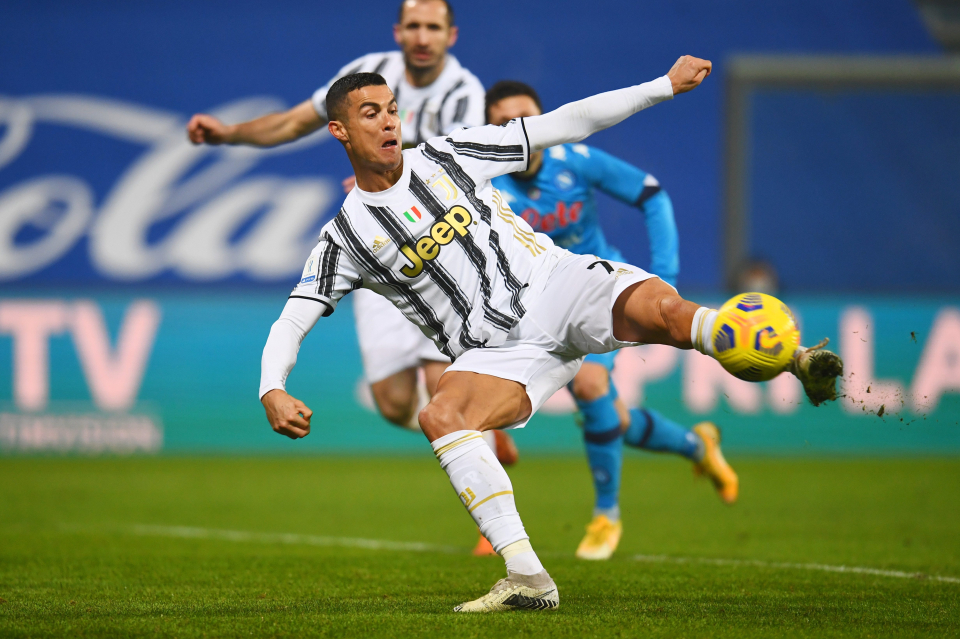
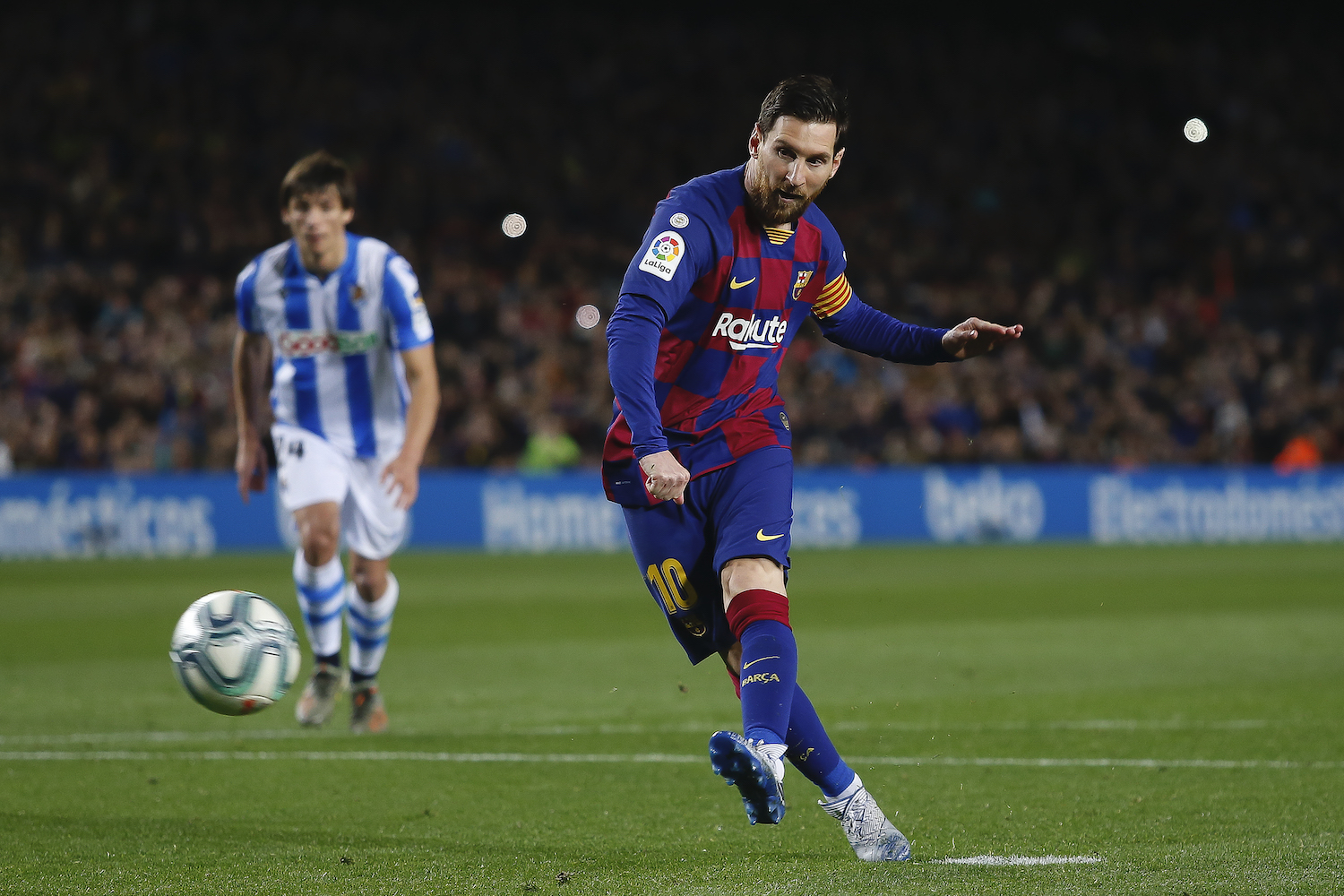
Football is a family of team sports that involve, to varying degrees, kicking a ball to score a goal. Unqualified, the word football normally means the form of football that is the most popular where the word is used. Sports commonly called football include association football (known as soccer in some countries); gridiron football (specifically American football or Canadian football);
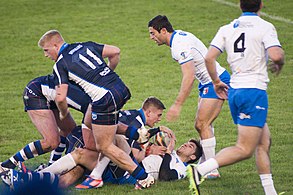
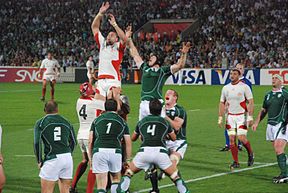
Australian rules football; rugby football (either rugby union or rugby league); and Gaelic football.[1] These various forms of football share to varying extent common origins and are known as football codes.There are a number of references to traditional, ancient, or prehistoric ball games played in many different parts of the world.[2][3][4] Contemporary codes of football can be traced back to the codification of these games at English public schools during the 19th century.
[5][6] The expansion and cultural influence of the British Empire allowed these rules of football to spread to areas of British influence outside the directly controlled Empire.[7] By the end of the 19th century, distinct regional codes were already developing: Gaelic football, for example, deliberately incorporated the rules of local traditional football games in order to maintain their heritage

The various codes of football share certain common elements and can be grouped into two main classes of football: carrying codes like American football, Canadian football, Australian football, rugby union and rugby league, where the ball is moved about the field while being held in the hands or thrown, and kicking codes such as Association football and Gaelic football, where the ball is moved primarily with the feet, and where handling is strictly limited.
... ...
... ...
... ...
... ...

The history of football (soccer)

Football (or soccer as the game is called in some parts of the world) has a long history. Football in its current form arose in England in the middle of the 19th century. But alternative versions of the game existed much earlier and are a part of the football history.

Early history and the precursors of football

The first known examples of a team game involving a ball, which was made out of a rock, occurred in old Mesoamerican cultures for over 3,000 years ago. It was by the Aztecs called Tchatali, although various versions of the game were spread over large regions. In some ritual occasions, the ball would symbolize the sun and the captain of the losing team would be sacrificed to the gods. A unique feature of the Mesoamerican ball game versions was a bouncing ball made of rubber – no other early culture had access to rubber.

Other variety of ball games had been known from Ancient Greece. The ball was made by shreds of leather filled with hair (the first documents of balls filled with air are from the 7th century). Ball games had, however, a low status and was not included at the Panhellenic Games. In the Ancient Rome, games with balls were not included in the entertainment on the big arenas (amphitheaters), but occurred in exercises in the military by the name of Harpastum. It was the Roman culture that would bring football to the British island (Britannica). It is, however, uncertain in which degree the British people were influenced by this variety and in which degree they had developed their own variants.

The game of football takes its form

The most admitted story tells that the game was developed in England in the 12th century. In this century, games that resembled football were played on meadows and roads in England. Besides from kicks, the game involved also punches of the ball with the fist. This early form of football was also much more rough and violent than the modern way of playing.

An important feature of the forerunners to football was that the games involved plenty of people and took place over large areas in towns (an equivalent was played in Florence from the 16th century where it was called Calcio). The rampage of these games would cause damage on the town and sometimes death to the participants. These would be among the reasons for the proclamations against the game that finally was forbidden for several centuries. But the football-like games would return to the streets of London in the 17th century. It would be forbidden again in 1835, but at this stage the game had been established in the public schools.
It took, however, long time until the features of today’s football had been taken into practice. For a long time there was no clear distinction between football and rugby. There were also many variations concerning the size of the ball, the number of players and the length of a match.

This early form of football was also much more rough and violent than the modern way of playing. Another important difference at this stage could be noticed between English and Scottish teams. Whereas the English teams preferred to run forward with the ball in a more rugby fashion, the Scottish chose to pass the ball between their players. It would be the Scottish approach that soon became predominant. It took, however, long time until the features of today’s football had been taken into practice. For a long time of football we here to done that league.

UEFA Euro 2020

The 2020 UEFA European Football Championship, commonly referred to as 2020 UEFA European Championship, UEFA Euro 2020, or simply Euro 2020, is the 16th UEFA European Championship, the quadrennial international men's football championship of Europe organised by the Union of European Football Associations (UEFA).[1]
The tournament, being held in 11 cities in 11 UEFA countries, was originally scheduled from 12 June to 12 July 2020, but was postponed due to the COVID-19 pandemic in Europe and rescheduled for 11 June to 11 July 2021.[2] It retains the name "UEFA Euro 2020".[3] Portugal are the defending champions, having won the 2016 competition in France, and the video assistant referee (VAR) system makes its debut at the European Championship in this tournament.[4]

UEFA President Michel Platini said in 2012 that the tournament was to be hosted in several nations as a "romantic" one-off event to celebrate the 60th "birthday" of the European Championship competition.[5] Having the largest capacity of any of the stadiums entered for the competition, Wembley Stadium in London is scheduled to host the semi-finals and final for the second time, having done so before at the 1996 tournament in the stadium's former incarnation. The Stadio Olimpico in Rome was chosen to host the opening game, involving Turkey and hosts Italy. Originally to be played at 13 venues, two hosts were later removed: Brussels in December 2017 due to the abandonment of building the Eurostadium,[6] and Dublin in April 2021 as there was no guarantee that spectators could attend. Spain also changed their host city from Bilbao to Seville to allow an audience at matches.[7] Italian prime minister Mario Draghi said the final should be held in Rome due to rising COVID-19 cases in the UK.[8]
Portugal are the defending champions, having won the 2016 competition in France, and the video assistant referee (VAR) system makes its debut at the European Championship in this tournament.[4]

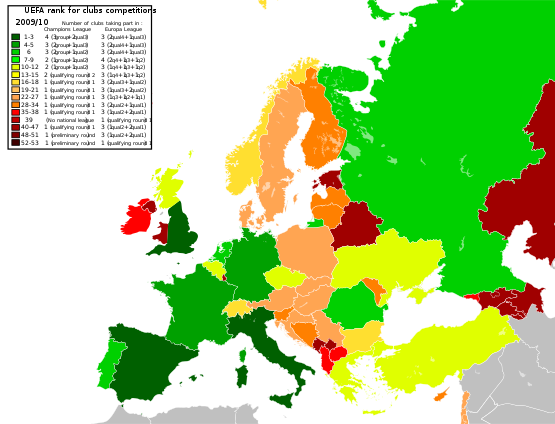
UEFA member countries by club competition entry entitlements, 2009/10